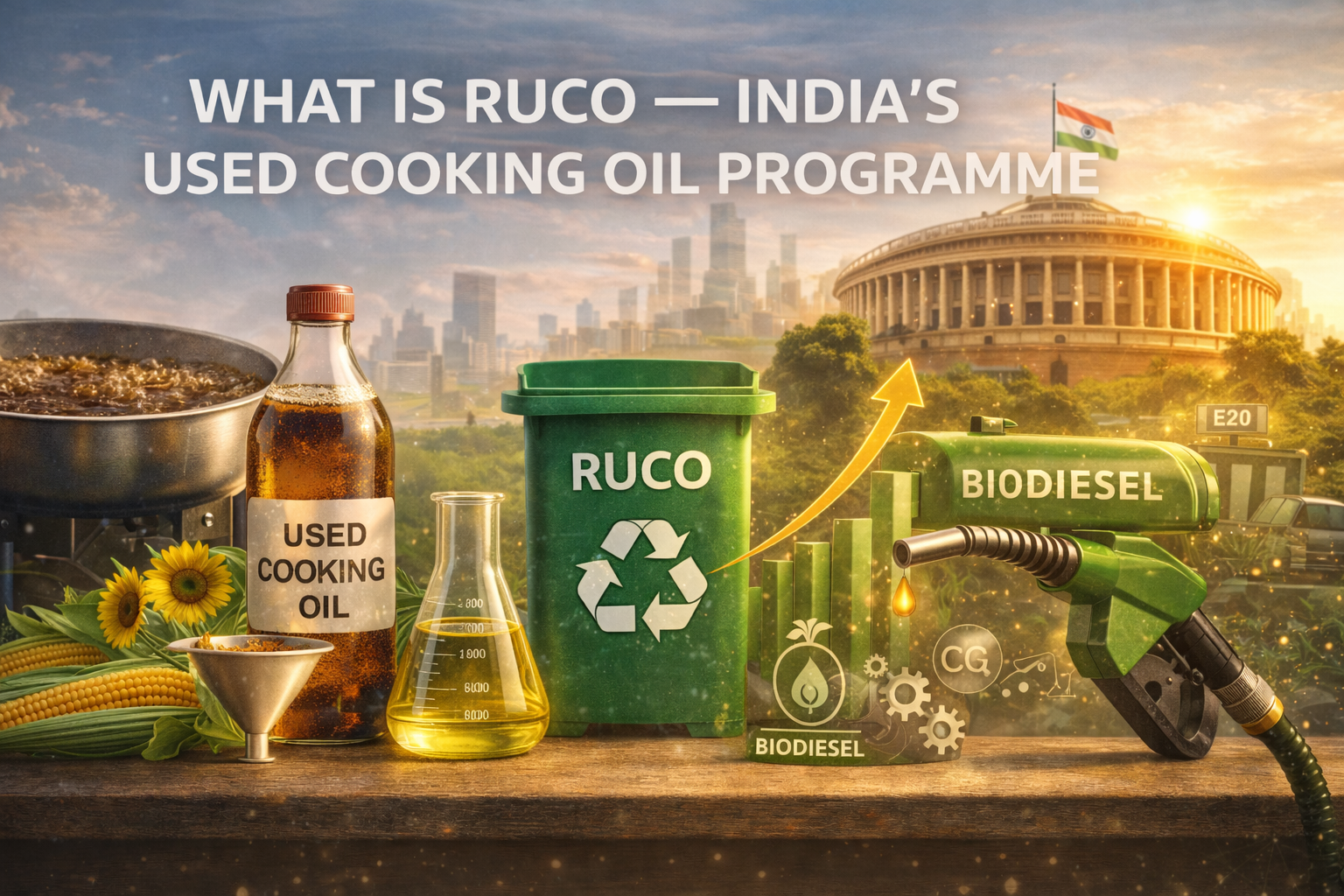
In recent years, India has taken significant steps to improve food safety and environmental sustainability. One such initiative is RUCO – Repurpose Used Cooking Oil, launched by the Food Safety and Standards Authority of India. This program aims to regulate the disposal and reuse of used cooking oil (UCO), ensuring better public health and supporting eco-friendly practices like biodiesel production.
What is RUCO?
RUCO (Repurpose Used Cooking Oil) is a nationwide initiative introduced by the FSSAI to manage and monitor the safe disposal of used cooking oil. The programme focuses on preventing the harmful practice of reusing cooking oil multiple times, which can lead to severe health risks.
Under this initiative, food business operators such as restaurants, hotels, and street vendors are encouraged to dispose of their used oil responsibly by selling it to authorized collection agencies. These agencies then convert the oil into biofuel or other industrial products.
Why is RUCO Important?
The excessive reuse of cooking oil is a common practice in India, especially in commercial kitchens. However, reheating oil repeatedly increases the formation of toxic compounds, including trans fats, which are harmful to human health.
RUCO addresses this issue by spreading awareness and enforcing guidelines to limit oil reuse. It also promotes the use of oil only up to a certain threshold known as Total Polar Compounds (TPC), beyond which the oil becomes unsafe for consumption.
By regulating the disposal of used oil, RUCO not only safeguards public health but also contributes to environmental protection.
Health Benefits of RUCO
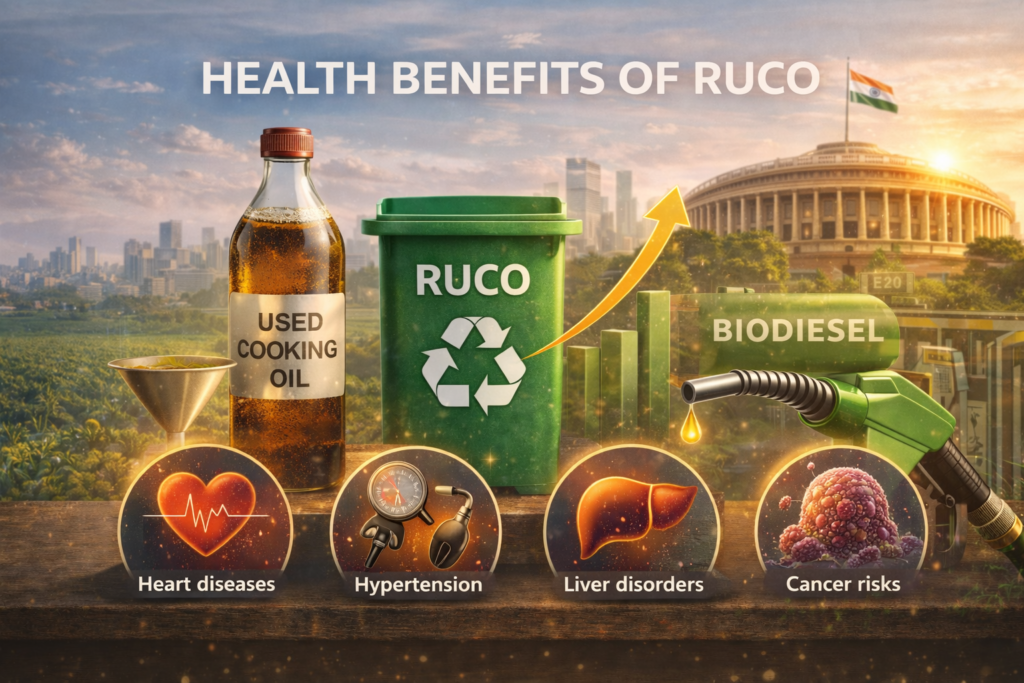
One of the major objectives of RUCO is to reduce the health risks associated with consuming food prepared in reused oil. Continuous use of degraded oil can lead to diseases such as:
- Heart diseases
- Hypertension
- Liver disorders
- Cancer risks
By ensuring that cooking oil is not reused beyond safe limits, RUCO helps improve the overall quality of food consumed by millions of people across India.
Environmental Impact
Apart from health concerns, improper disposal of used cooking oil can harm the environment. When oil is poured into drains or landfills, it leads to:
- Water pollution
- Soil contamination
- Blockage in drainage systems
Through RUCO, used oil is collected and converted into biodiesel, which is a cleaner and more sustainable alternative to traditional fossil fuels. This supports India’s efforts toward reducing carbon emissions and promoting renewable energy sources.
How RUCO Works
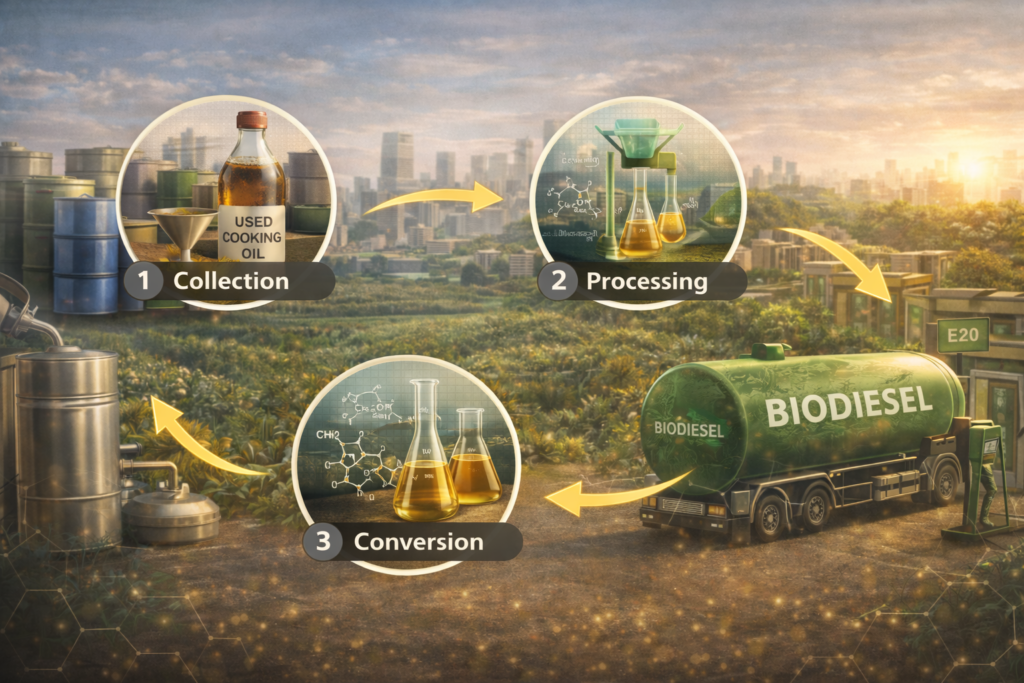
The RUCO programme operates through a well-structured system involving multiple stakeholders:
- Food Business Operators (FBOs): They are required to monitor oil usage and avoid reuse beyond safe limits.
- Collection Agencies: Authorized companies collect used cooking oil from FBOs.
- Processing Units: The collected oil is converted into biodiesel or other industrial products.
- Regulatory Authority: The Food Safety and Standards Authority of India ensures compliance and monitors the entire process.
This organized chain ensures that used oil is safely disposed of and effectively reused for sustainable purposes.
Role in Biodiesel Production
One of the most impactful aspects of RUCO is its contribution to biodiesel production. Instead of wasting used oil, the programme transforms it into a valuable resource.
Biodiesel produced from used cooking oil helps in:
- Reducing dependency on fossil fuels
- Lowering greenhouse gas emissions
- Supporting India’s clean energy goals
This aligns with the government’s vision of promoting sustainable development and a greener future.
Awareness and Compliance
To make RUCO successful, awareness plays a crucial role. The FSSAI conducts regular campaigns, workshops, and training sessions to educate food businesses and consumers about the dangers of reusing cooking oil.
Strict guidelines have also been introduced, requiring businesses to maintain records of oil usage and disposal. Non-compliance can lead to penalties, ensuring that the rules are followed effectively.
Conclusion
RUCO – Repurpose Used Cooking Oil is a revolutionary initiative that bridges the gap between food safety and environmental sustainability. By regulating the use and disposal of cooking oil, it protects public health, reduces environmental damage, and promotes biodiesel production.
As awareness continues to grow, RUCO has the potential to transform how India manages its food and energy resources. It is not just a programme but a step towards a healthier, cleaner, and more sustainable future.

Frequently Asked Questions
What is RUCO (Repurpose Used Cooking Oil)?
RUCO is an initiative by the Food Safety and Standards Authority of India to ensure the safe disposal and repurposing of used cooking oil into biodiesel and other eco-friendly products.
Why is reusing cooking oil harmful?
Reusing cooking oil multiple times leads to the formation of toxic compounds and trans fats, increasing the risk of heart disease, cancer, and other health issues.
What is the safe limit for using cooking oil?
The safety of oil is measured by Total Polar Compounds (TPC). If the TPC level exceeds 25%, the oil is considered unsafe and should not be reused.
How does RUCO help the environment?
RUCO promotes the collection of used cooking oil, which is then converted into biodiesel, reducing pollution, preventing drain blockages, and supporting clean energy.
Who needs to follow RUCO guidelines?
All Food Business Operators (FBOs), including restaurants, hotels, and street vendors, must follow RUCO guidelines to ensure safe oil usage and proper disposal.