
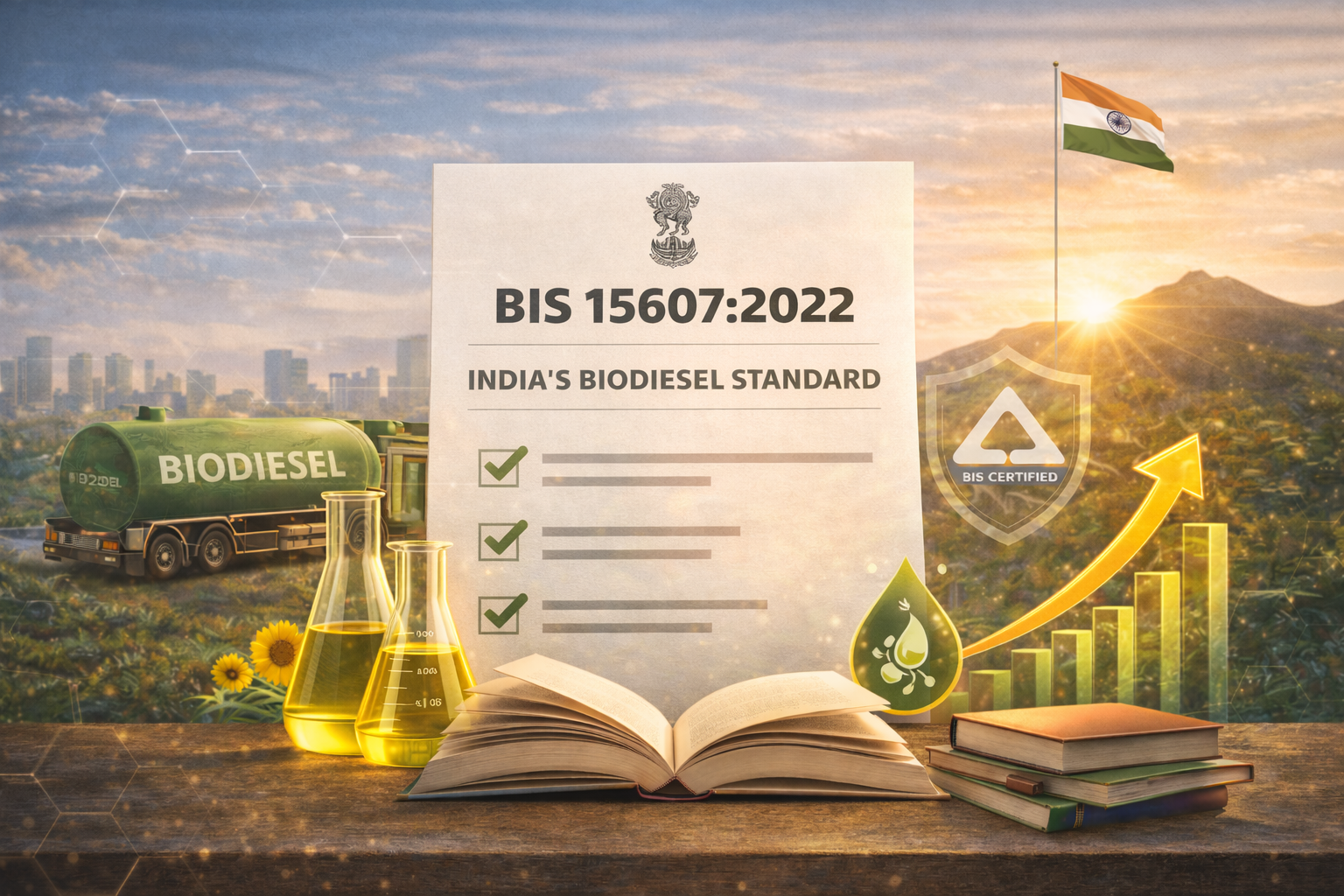
In recent years, biodiesel in India has gained significant attention as the country moves toward cleaner and more sustainable energy solutions. To ensure quality, safety, and performance, the Bureau of Indian Standards (BIS) introduced BIS 15607:2022, a crucial standard that defines the specifications for biodiesel used in diesel engines.
Understanding BIS 15607:2022
BIS 15607:2022 is the updated version of India’s official biodiesel fuel standard, specifically designed for Fatty Acid Methyl Ester (FAME)-based biodiesel. This standard ensures that biodiesel produced and sold in India meets strict quality benchmarks, making it suitable for blending with conventional diesel.
The main objective of this biodiesel standard in India is to maintain consistency in fuel quality, protect engine performance, and support environmental goals.
Why BIS 15607:2022 is Important
The introduction of BIS 15607:2022 plays a vital role in promoting the adoption of renewable fuel in India. Here’s why it matters:
- Ensures high-quality biodiesel for better engine performance
- Reduces harmful emissions and supports carbon reduction goals
- Builds trust among consumers and fuel manufacturers
- Aligns India with global biodiesel quality standards
Without proper regulations like BIS standards for biodiesel, the market could face issues related to inconsistent fuel quality and engine damage.
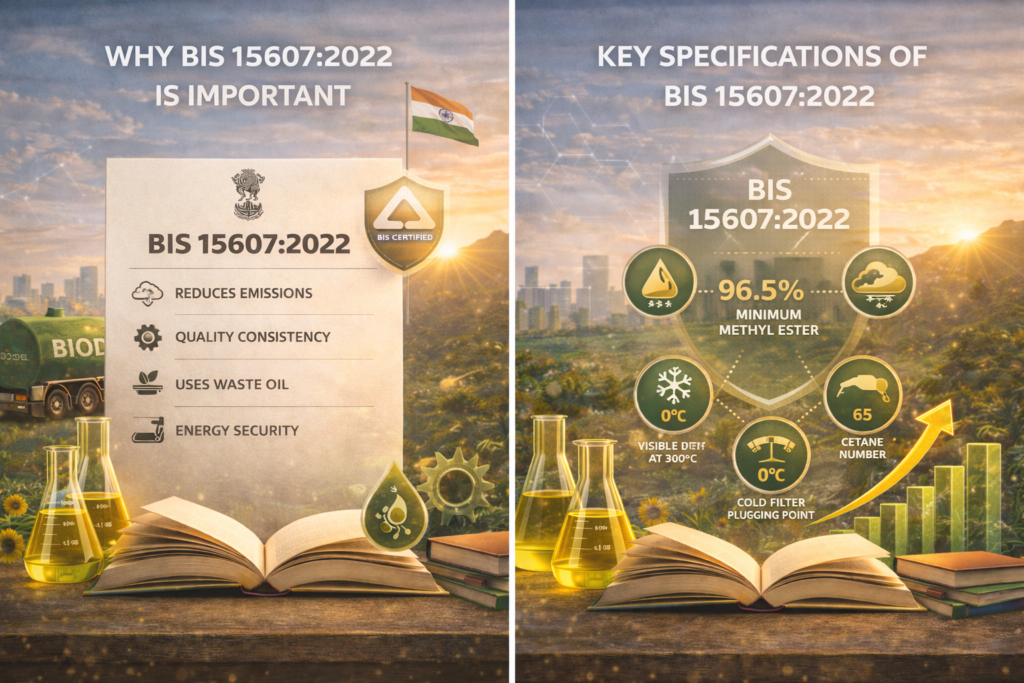
Key Specifications of BIS 15607:2022
The BIS biodiesel standard outlines several parameters that biodiesel must meet before it is approved for use. Some of the important specifications include:
- Density and viscosity: Ensures smooth fuel flow and proper combustion
- Flash point: Maintains safety during storage and handling
- Sulphur content: Keeps emissions low and environmentally friendly
- Water and sediment content: Prevents engine corrosion and clogging
- Acid value: Indicates fuel stability and quality
These parameters help ensure that biodiesel fuel quality remains consistent across the country.
Biodiesel Blending and BIS 15607:2022
India is actively promoting biodiesel blending programs, where biodiesel is mixed with traditional diesel in specific ratios like B5, B10, or B20. The BIS 15607:2022 standard ensures that the biodiesel used in these blends is compatible with existing diesel engines.
By following this Indian biodiesel specification, fuel companies can safely increase the share of renewable fuels without affecting engine efficiency or lifespan.
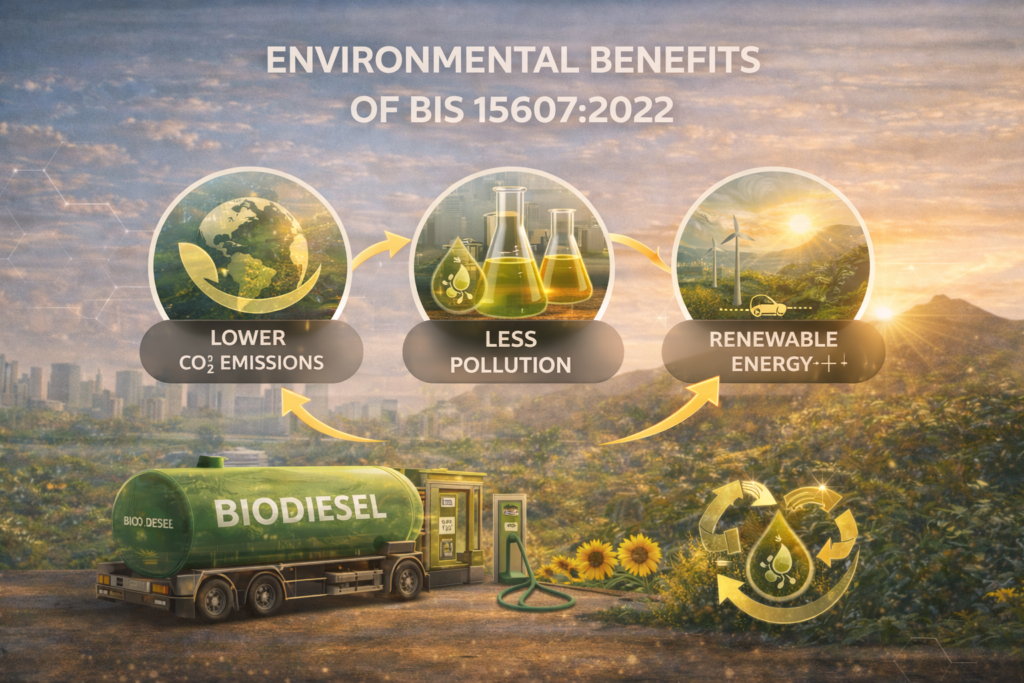
Environmental Benefits of BIS 15607:2022
One of the biggest advantages of adopting BIS 15607:2022 is its contribution to sustainability. Biodiesel produced under this standard helps:
- Reduce greenhouse gas emissions
- Lower dependence on fossil fuels
- Promote the use of eco-friendly fuel alternatives
- Support India’s commitment to net-zero emissions
Compared to conventional diesel, biodiesel fuel in India can significantly cut carbon emissions, making it a cleaner option for transportation and industries.
Impact on Biodiesel Industry in India
The implementation of BIS 15607:2022 has positively influenced the biodiesel industry in India. It has encouraged manufacturers to improve production processes and maintain higher quality standards.
For businesses, this means better market opportunities and increased trust among buyers. For consumers, it ensures reliable and efficient fuel performance.
Moreover, the standard supports government initiatives like the National Bio-Energy Mission, boosting the growth of renewable energy in India.
Challenges and Future Outlook
While BIS biodiesel standards have set a strong foundation, there are still challenges to overcome:
- Limited awareness about biodiesel usage in India
- Supply chain and feedstock availability
- Infrastructure for large-scale biodiesel distribution
However, with continuous policy support and advancements in technology, the future of biodiesel fuel standards in India looks promising.
Conclusion
BIS 15607:2022 is a cornerstone in India’s journey toward sustainable energy. By defining clear specifications for biodiesel quality, it ensures safety, performance, and environmental benefits.
As India continues to push for clean energy solutions, standards like BIS 15607:2022 will play a critical role in shaping the future of the biodiesel market in India. For manufacturers, consumers, and policymakers alike, adhering to this standard is essential for building a greener and more efficient energy ecosystem.
Frequently Asked Questions
What is BIS 15607:2022?
BIS 15607:2022 is the official biodiesel standard in India that defines quality specifications for FAME-based biodiesel fuel used in diesel engines.
Why is BIS 15607:2022 important for biodiesel?
This standard ensures biodiesel fuel quality, improves engine performance, and reduces emissions, supporting clean energy goals in India.
What are the key parameters in BIS biodiesel standards?
The standard includes viscosity, density, flash point, sulphur content, acid value, and water content to ensure safe and efficient fuel usage.
Can biodiesel as per BIS 15607:2022 be used in all engines?
Yes, biodiesel meeting BIS 15607:2022 specifications can be safely blended with diesel (like B5, B10, B20) and used in most diesel engines.
How does BIS 15607:2022 support the environment?
It promotes eco-friendly biodiesel fuel, helping reduce carbon emissions, dependence on fossil fuels, and supporting sustainable energy in India.