
Our Products

Biodiesel for a Sustainable Future

Namberdar Bio Fuels Private Limited manufactures and supplies three core products from its production facility in Sikandrabad, Bulandshahr, Uttar Pradesh — biodiesel, crude glycerine, and fatty acid. All products are derived from renewable feedstocks including used cooking oil, animal fats, and tallow, and are available for bulk supply to industrial buyers, Oil Marketing Companies, and commercial clients across India.

BIODIESEL (B100)

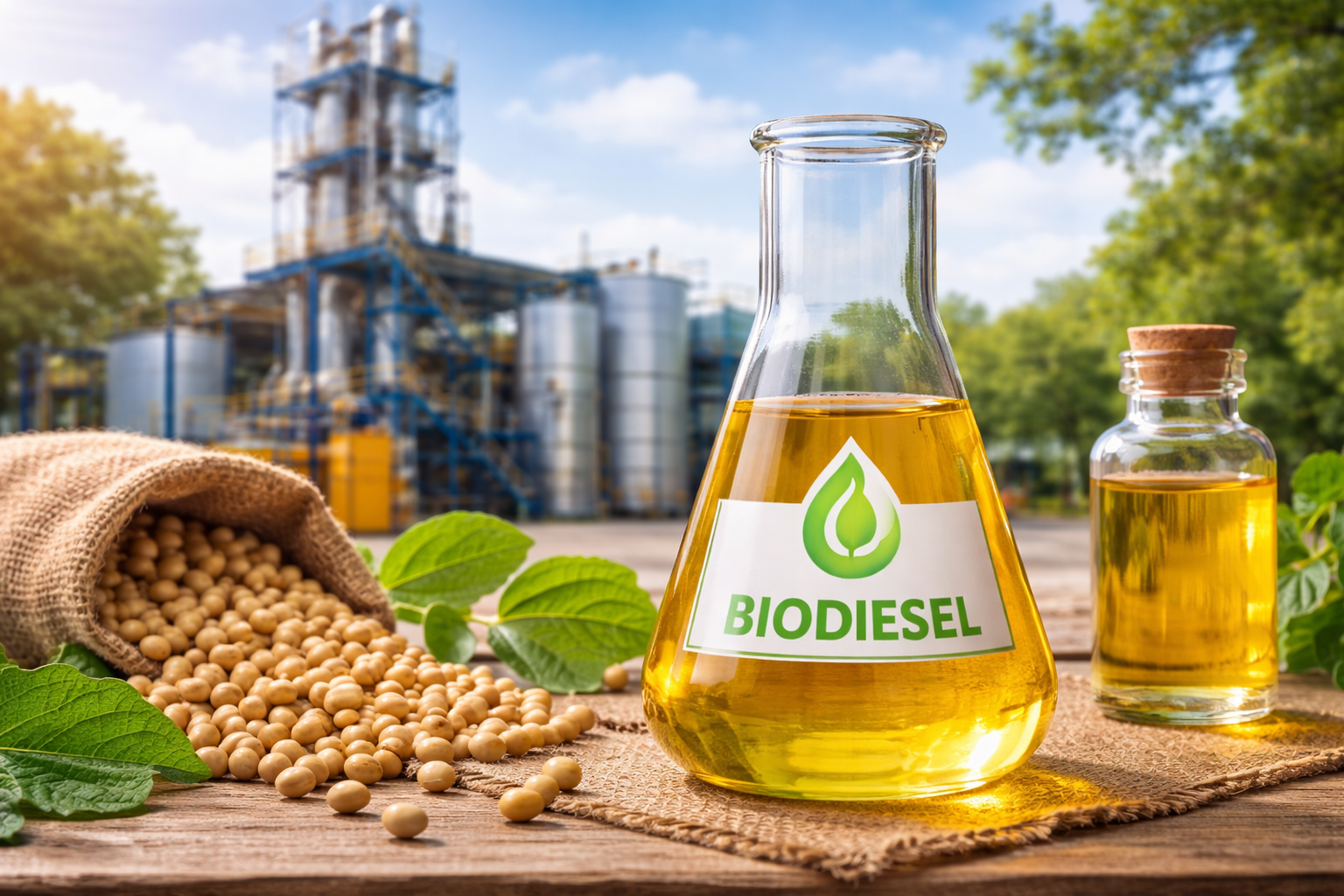
Biodiesel production

Biodiesel is a renewable, biodegradable liquid fuel produced through the chemical process of transesterification — the reaction of vegetable oils or animal fats with methanol in the presence of a catalyst. In its pure, unblended form referred to as B100, biodiesel can be used directly in compression ignition diesel engines or blended with petroleum diesel at ratios of B5, B10, or B20 as per Oil Marketing Company specifications. It is the only alternative fuel that can be used in existing, unmodified diesel engines without any retrofits, making it the most scalable and practical renewable energy solution available for India's transportation and industrial sectors today.

Namberdar Bio Fuels produces B100 biodiesel that meets BIS 15607:2022 — the Indian Standard for Biodiesel Blend Stock for Automotive Fuels — as well as IS 1460:2017. The biodiesel carries extremely low sulphur content, qualifying it for BS-VI fuel blending requirements. Every production batch is tested for kinematic viscosity at 40°C, flash point, water content, acid number, free and total glycerol, and cetane number before dispatch. Full batch test documentation is provided with every consignment.

Biodiesel Pump

From an environmental standpoint, biodiesel reduces lifecycle CO₂ emissions by up to 78% compared to conventional petroleum diesel. Particulate matter emissions are reduced significantly, sulphur emissions are negligible, and the fuel is biodegradable — breaking down naturally in soil and water without persistent contamination. For industries operating under ESG reporting frameworks or supplying to sectors that are increasingly subject to emission norms, biodiesel blends offer a direct, operationally compatible path to reducing their carbon footprint.

Our multi-feedstock production capability means we process used cooking oil sourced from food processing units and commercial kitchens, animal fats and tallow from rendering operations, non-edible vegetable oils including Jatropha, Karanja, and Mahua, acid oil from vegetable oil refining, and palm stearin. This feedstock flexibility allows us to maintain supply continuity regardless of seasonal availability of any single raw material.

Crude Glycerine

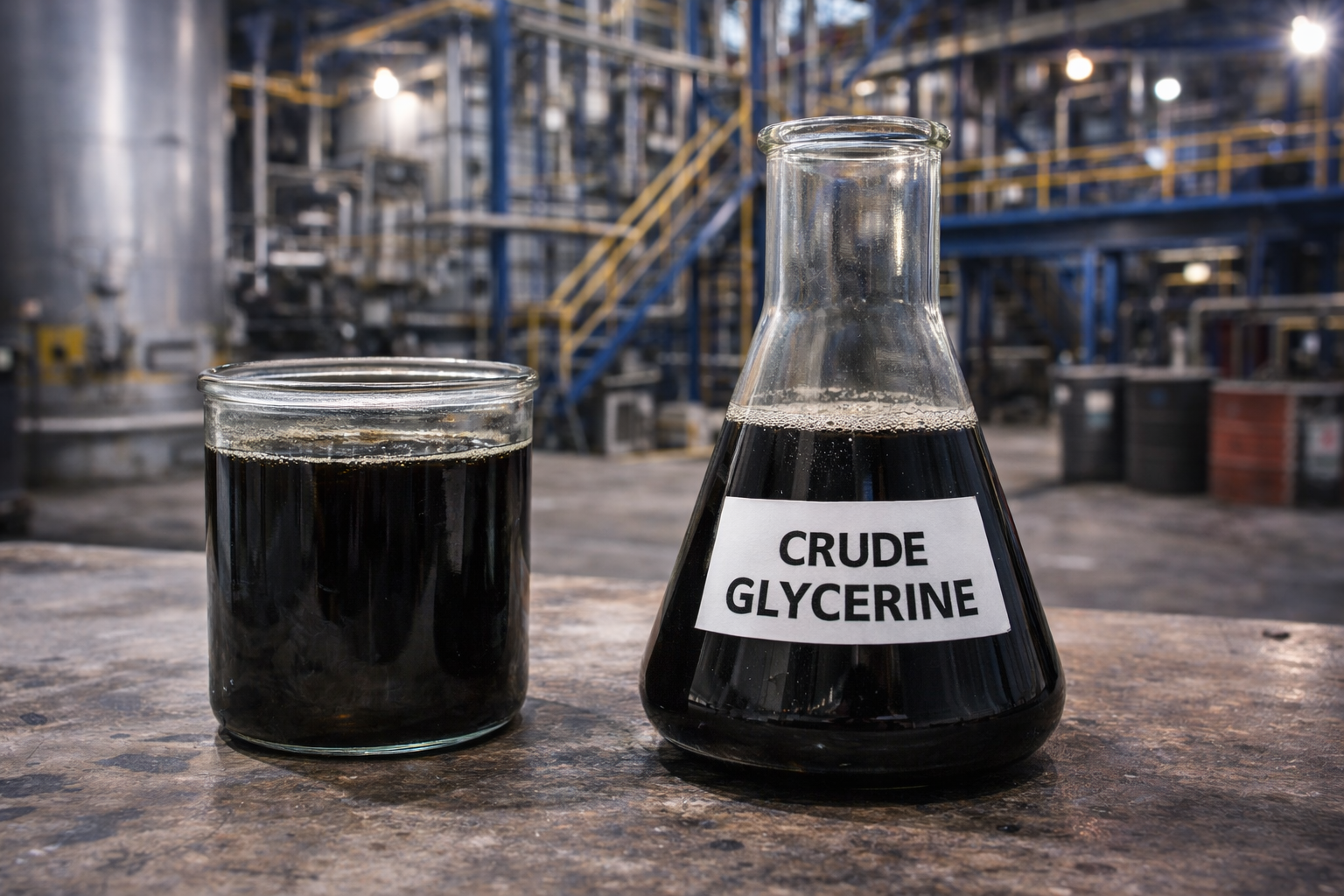
Crude glycerine is a natural by-product of the transesterification process through which biodiesel is manufactured. During the reaction between feedstock oils and methanol, triglycerides are broken down into methyl esters (biodiesel) and glycerol. This glycerol is then separated, treated with hydrochloric acid, and recovered as crude glycerine at approximately 80% purity. Namberdar Bio Fuels supplies crude glycerine in bulk quantities to industrial and commercial buyers across multiple sectors.

Industrial crude glycerine production process

Crude glycerine has a wide range of industrial applications. In the animal feed industry it is used as an energy-dense supplement in livestock feed formulations. In the energy sector it serves as a feedstock for biogas plants and as a combustion fuel in industrial heating applications. The pharmaceutical industry refines glycerine for use in medicines, syrups, topical formulations, and as a carrier agent in drug delivery systems. The chemical industry uses crude glycerine as a raw material for the production of polyols, epichlorohydrin, propylene glycol, and a range of other chemical derivatives. The textile and paper processing industries use glycerine as a moisturising and softening agent during fibre and paper treatment.

Fatty Acid

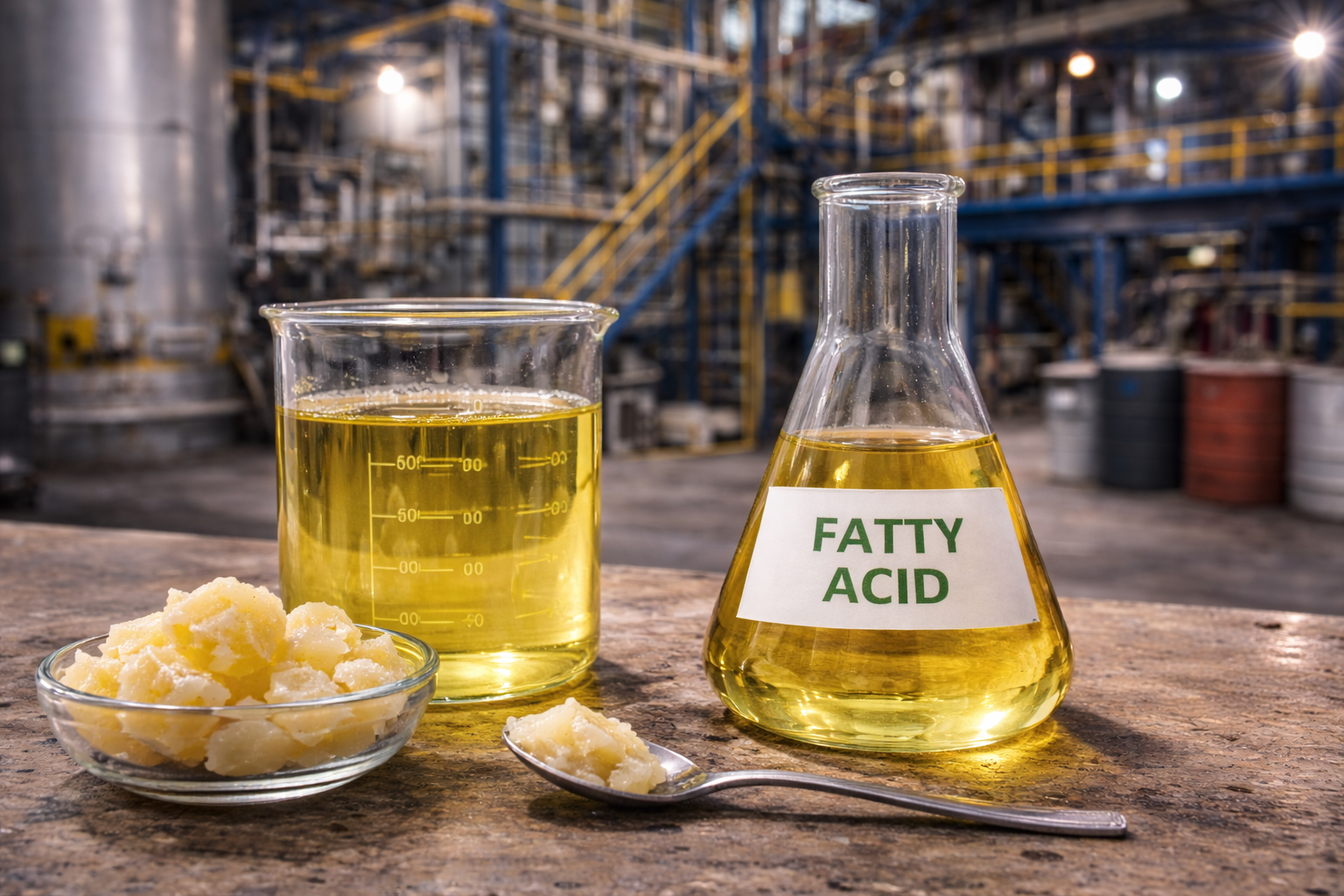
Industrial fatty acid processing scene

Fatty acids are derived as a co-product during the esterification stage of biodiesel production, particularly when processing feedstocks with high free fatty acid content such as used cooking oil, tallow, or acid oil. During esterification, the free fatty acids in the feedstock are converted into methyl esters in the presence of methanol and sulfuric acid, with fatty acid fractions separated out as a recoverable co-product. Namberdar Bio Fuels supplies fatty acids in bulk for a range of industrial applications.

The soap and detergent manufacturing industry is the primary consumer of fatty acids, where they are used as the primary input in the saponification process. The cosmetics and personal care industry uses fatty acids as emollients, emulsifiers, and surfactants in skincare, haircare, and cleansing products. The lubricant industry uses fatty acids in formulating metalworking fluids, cutting oils, and industrial lubricants. The rubber and plastics industries use fatty acids as processing aids and internal lubricants during compounding and extrusion. Fatty acids can also be reintroduced into the biodiesel production cycle to improve overall feedstock yield and process efficiency.

Production Process

How do we make our Biofuel?

Step 1
history-image
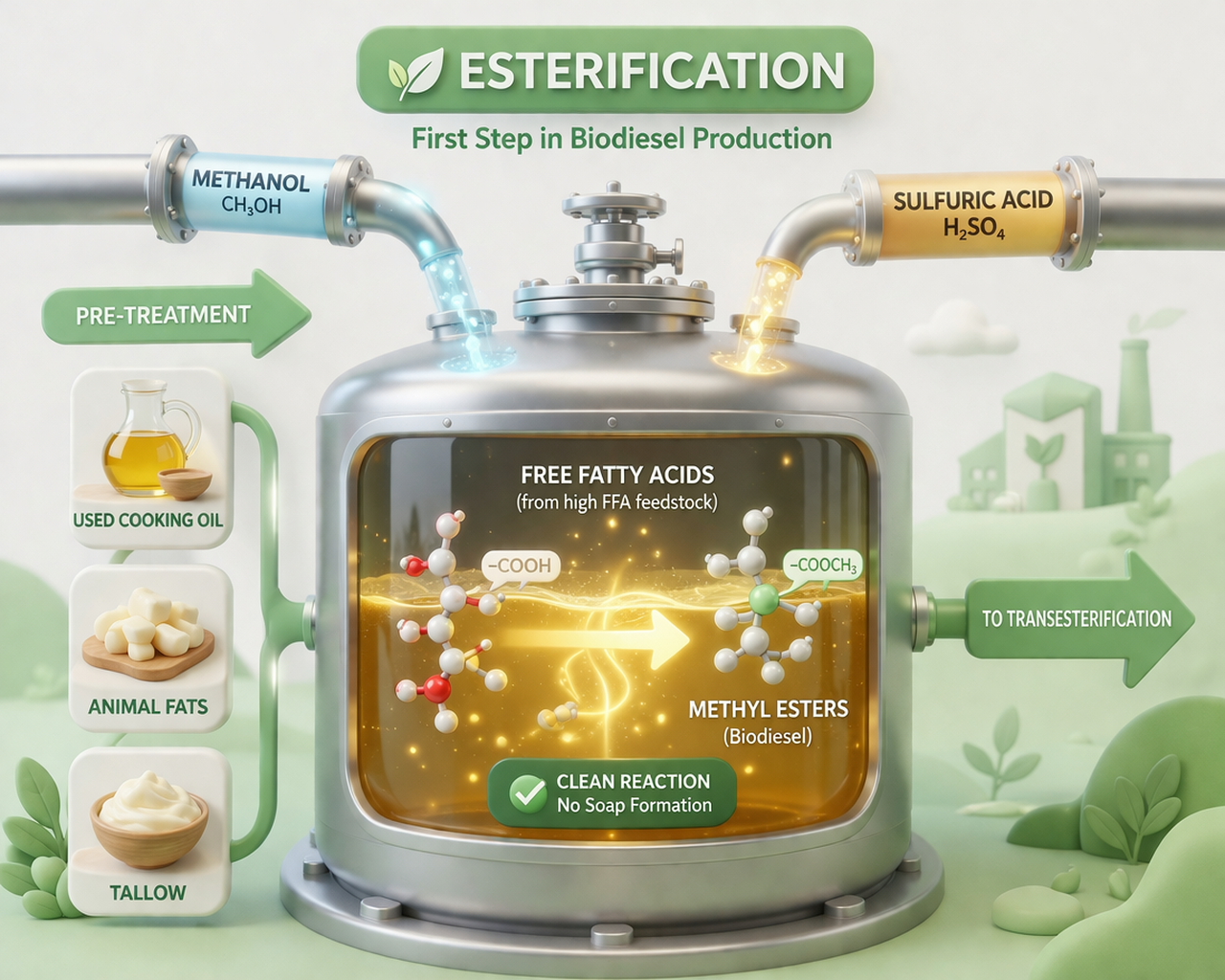
Esterification (for High FFA Feedstocks)

Raw materials including animal fats, used cooking oil (UCO), and tallow with high free fatty acid (FFA) content are first treated with methanol and sulfuric acid (H₂SO₄). This pre-treatment converts free fatty acids into methyl esters, preparing the feedstock for the main transesterification reaction and preventing soap formation.
Step 2
history-image
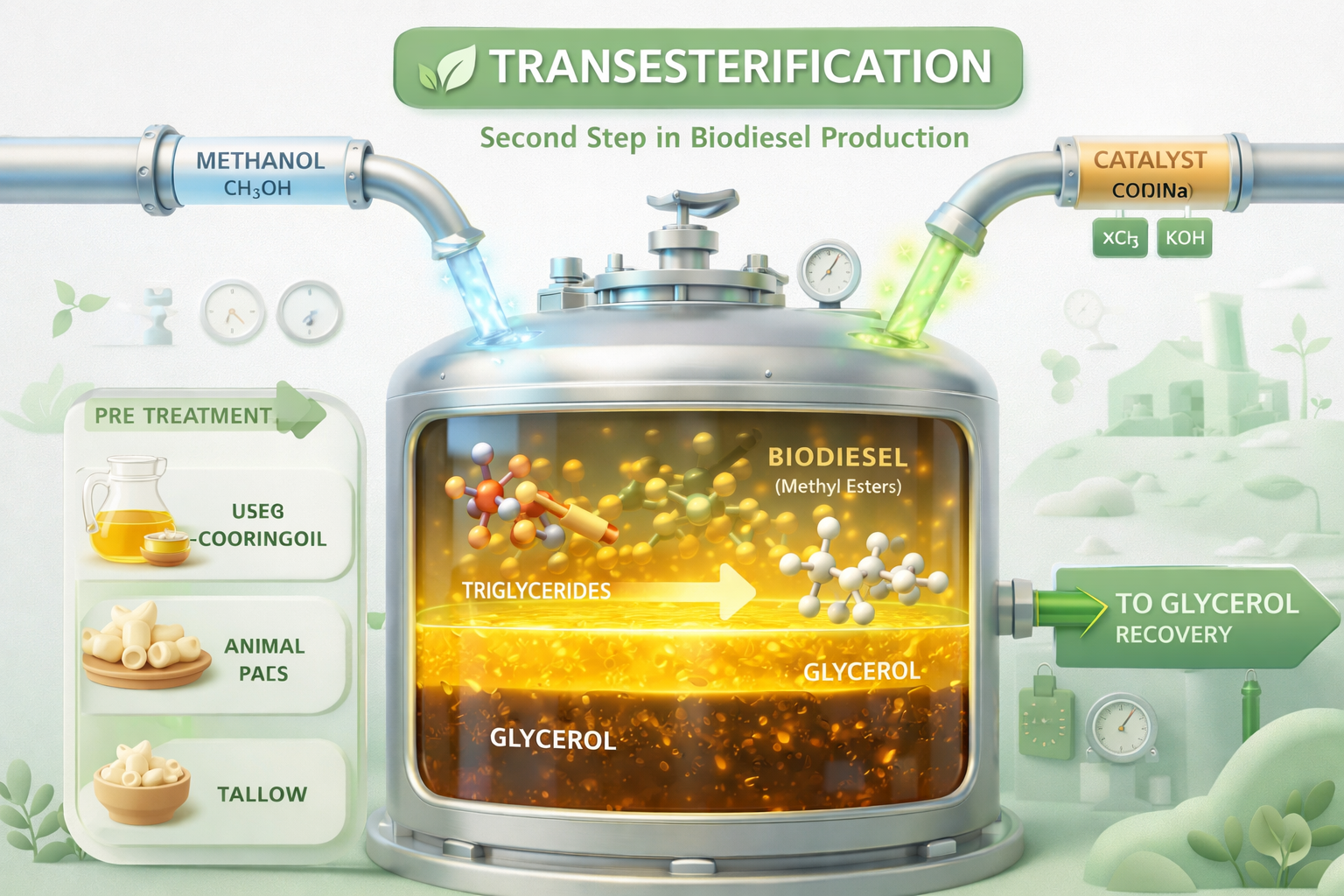
Transesterification

Pre-treated fats and oils are reacted with methanol in the presence of a catalyst — either sodium methylate or potassium hydroxide (KOH). This chemical process converts triglycerides in the feedstock into biodiesel (methyl esters) and produces crude glycerol as a by-product. The reaction is carried out in our purpose-built reactors under controlled temperature and pressure conditions.
Step 3
history-image
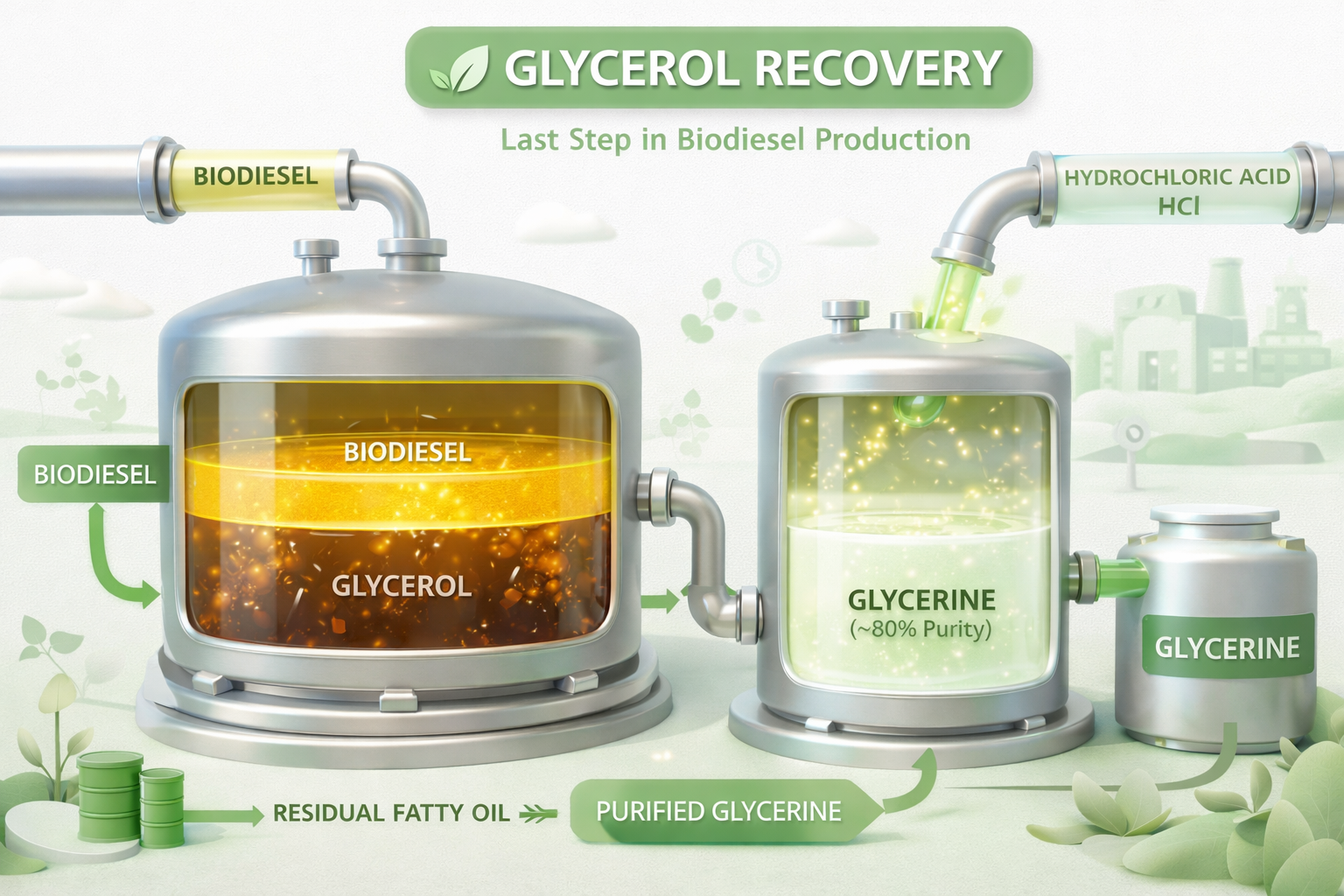
Glycerol Recovery

Crude glycerol is separated from the biodiesel phase and treated with hydrochloric acid (HCl) to produce crude glycerine at approximately 80% purity. The glycerine is then set aside for sale to industrial buyers or further refining, while the fatty oil layer is retained for reprocessing.
Step 4
history-image
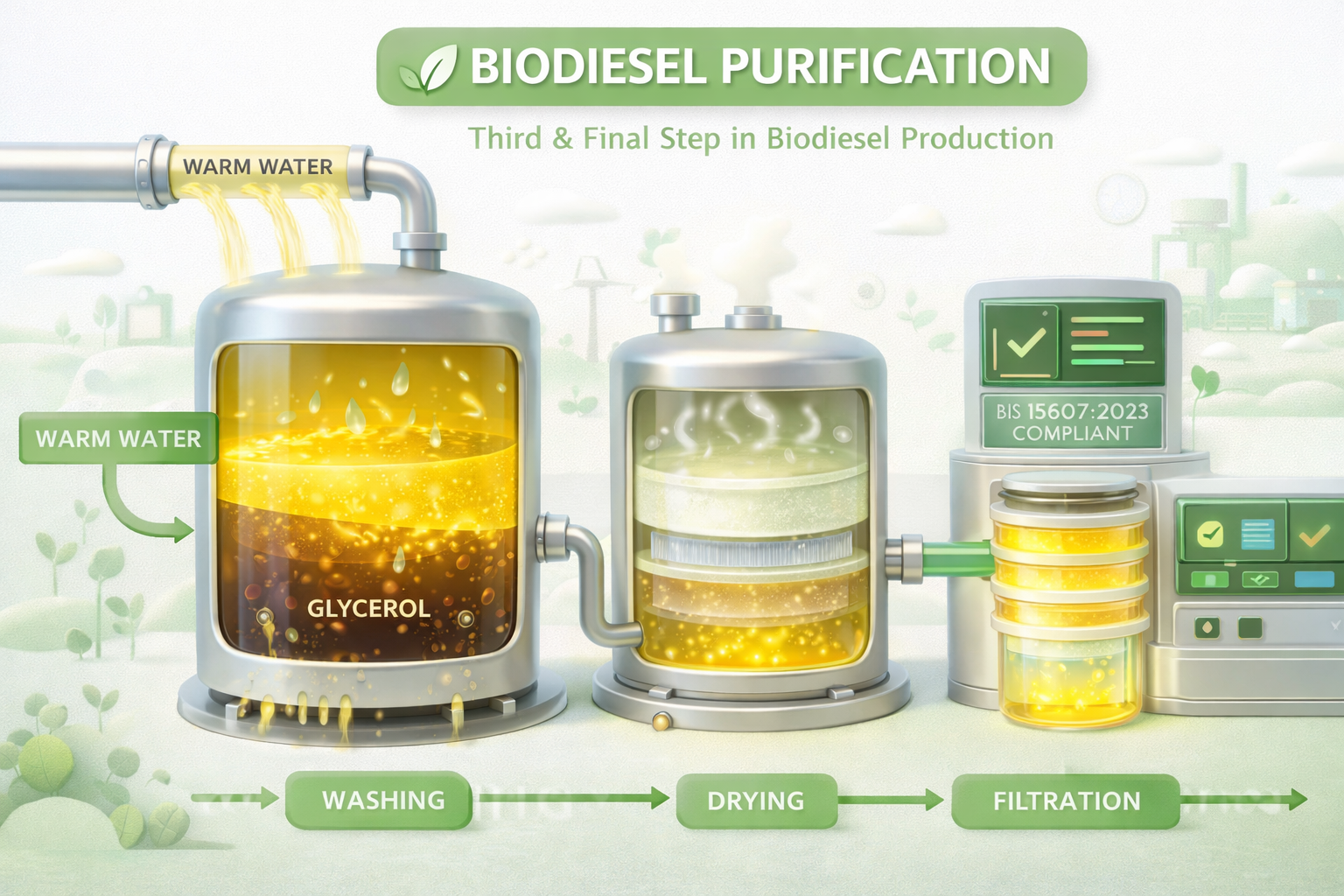
Purification

Crude biodiesel is washed with warm water to remove residual methanol, soap, and catalytic impurities. It is then dried to remove water content and passed through filtration systems to achieve the final product quality. All batches are tested against BIS 15607:2022 parameters before dispatch.

Frequently Asked Questions

Can biodiesel be used in standard diesel engines?

Yes. B100 and all biodiesel blends (B5, B10, B20) are fully compatible with compression ignition diesel engines without any modification. Biodiesel actually improves lubricity and extends engine life compared to conventional diesel.

What feedstocks are used in your biodiesel production?

We process used cooking oil (UCO), animal fats, tallow, non-edible vegetable oils, and acid oil. Our facility has full flexibility to switch between feedstocks based on availability and market conditions.

How do you ensure batch quality?

Every production batch undergoes testing for all BIS-specified parameters including viscosity, flash point, water content, acid number, free glycerol, total glycerol, and cetane number. Documentation is provided with each consignment.

What quality standards does your biodiesel meet?

All biodiesel produced by Namberdar Bio Fuels meets BIS 15607:2022 (the Indian Standard for Biodiesel Blend Stock) and IS 1460:2017 (Automotive Diesel Fuel specification). International standards EN 14214 (European) and ASTM D6751 (American) are also referenced in our quality framework.